

PwC’s experience centre Amsterdam
Welcome to BXT
After almost 30 years in advertising agencies, I made a significant career shift. I moved from conversations about brands and marketing to working directly with boards and C-level executives.
It was a fascinating transition.
In advertising, my focus had always been on changing people’s behaviour towards a brand or product.
At PwC’s Experience Centre, the ambition was bigger: to transform companies, organisations and even governments.
Yet the underlying principle remained the same: find the emotional connection, create a compelling vision, and inspire change.
My first task was to bring this approach to life within PwC itself, creating work that helped people understand the transformation.
PwCO2 project
We worked on a wide range of projects, from government initiatives and Unilever’s board to small and global brands.
One project was closely connected to PwC’s ambition to become carbon neutral by 2030.
We created the PwCO₂ Dashboard, giving every PwC employee a personal view of their daily carbon footprint.
From commuting to the office to the paper they used for printing, their CO₂ impact was visualised in a single, easy-to-understand dashboard.
The idea was simple: make the invisible visible, turning an ambitious corporate goal into something personal.
Mercedes used cars
The board of Mercedes-Benz in the Netherlands came to us with a question:
“Why are our second-hand car sales lagging behind new car sales?”
Their advertising agency had been unable to find the answer. We looked beyond the advertising and discovered that the real issue was trust.
When people buy a new Mercedes-Benz, they believe they are investing in an exceptional machine. They know what they are getting.
But when buying a second-hand Mercedes-Benz, doubt creeps in. What is its history? Has it been properly maintained? Can I trust the car?
The challenge wasn’t simply to sell more used cars. It was to give people a reason to trust them.
The car’s DNA
Reveal the car’s story. Uncover its DNA. And give people a reason to trust it.
The solution was simple: share all the available data. Service records, repairs, accidents. Show everything, even before and after images.
Be 100% open. Be transparent. Leave no room for doubt. The result? Second-hand car sales increased by 31%.
Sometimes, the best way to sell more is to hide less.
human experience
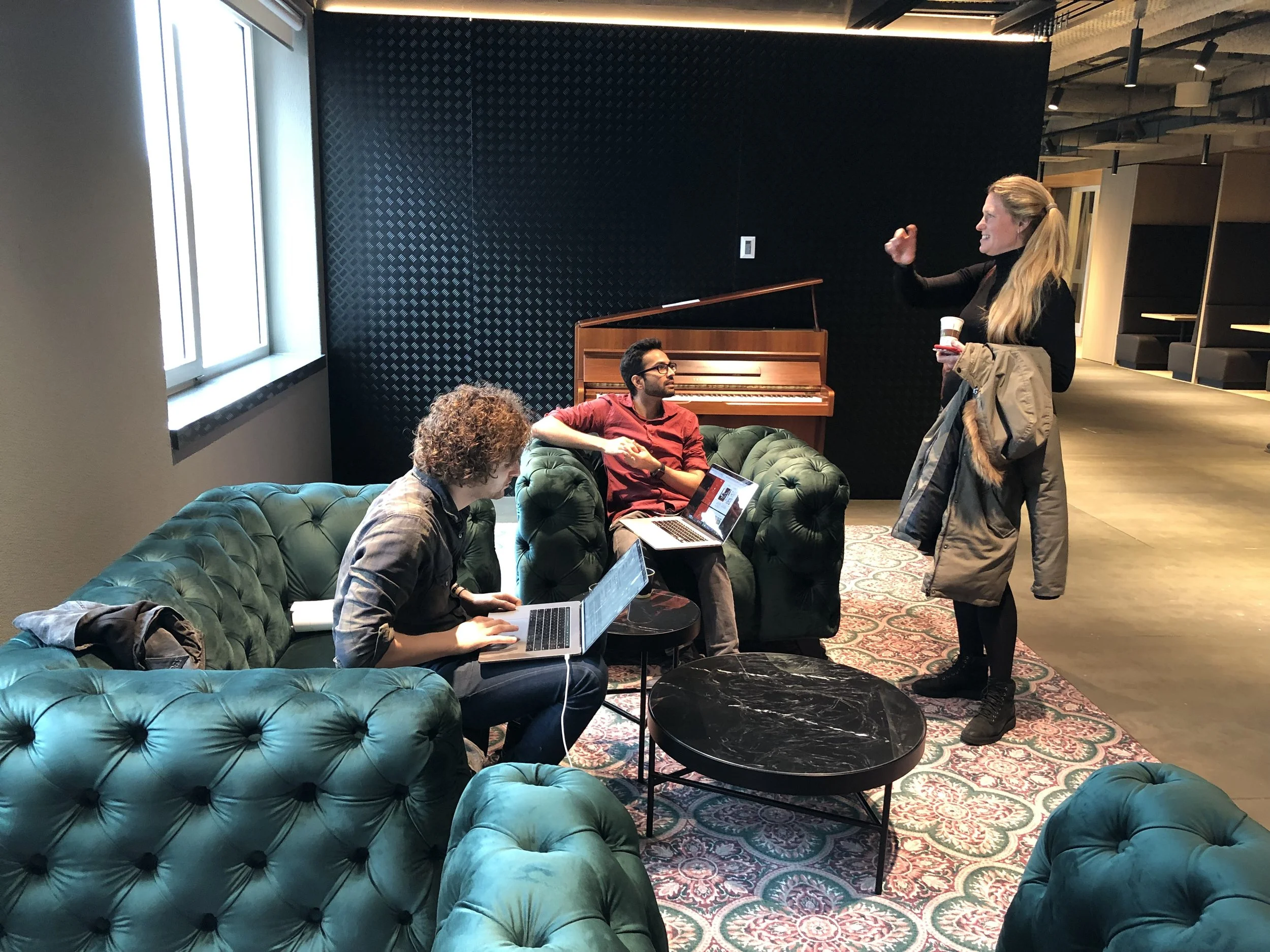
The Experience Centre team was a diverse mix of tech nerds, business model builders and human-centred thinkers.
During my three years there, we worked on fascinating projects for governments, Unilever, Heineken, hospitals, the transport sector, fashion, e-commerce and many more.
Between 2017 and 2019, we developed a project called “Glasses for the Blind”, in close collaboration with blind PwC employees.
The idea was to create glasses connected to a smartphone, allowing visually impaired users to access their apps simply by speaking to their glasses. We even developed a working prototype.
I often say “When you have a great idea, at least five other groups of people are probably having the same idea.”
I’m writing this today while wearing my Ray-Ban Meta glasses.
And I rest my case.
Results
The then 74 global experience centres changed the landscape of consultancy. PwC was a front runner.
Accenture Song and many others followed after.
In general it is a great shift in the consultancy arena to add a more human centred mindset and focus to things.
I am proud I was part of this shift.